
Last month we attended a presentation by the Texas Education Agency (TEA) Commissioner. The Commissioner reported our state’s underperforming academic status: in 2024, only 53% of 3rd-8th grade students met grade level for reading and 41% for math (a decline from the previous year).
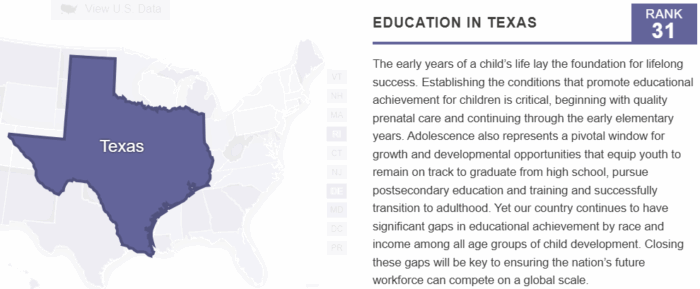
Nationwide, Texas ranks 31st in education. The Annie E. Casey Foundation identified that 72% of fourth graders are not reading proficiently and 76% of eighth graders are below proficiency in math.
These statewide struggles, compounded by pandemic setbacks – Texas has the sixth highest rate of bullying, and the eighth highest dropout rate in the nation – create significant barriers for all students. But for foster and homeless youth, these systemic challenges become exponentially worse. Imagine moving from placement to placement, school to school, carrying fear and trauma while trying to focus on fractions or phonics. For these vulnerable youth, their academic journeys are even more impacted.
The Hidden Crisis: Academic Needs of Foster Care and Unhoused Students
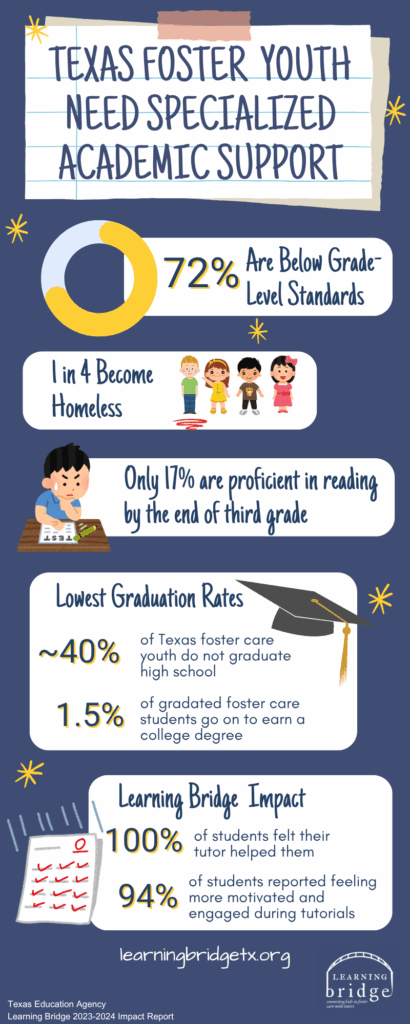
When we look deeper into the data for the vulnerable population we serve, the picture becomes even more urgent.
The Compounding Effect of Trauma and Instability
When children experience the trauma of family separation, housing instability, or multiple placement changes, their brains are focused on survival, not learning, making it nearly impossible to maintain consistent academic progress. Take these students that enrolled with Learning Bridge:
- An eighth-grader struggling to catch up to his peers after zero school attendance his 5th and 6th grade years (two full years missed!) during the COVID pandemic.
- A second-grader who has only a kindergarten level understanding, has missed a significant amount of school, and exhibits challenges with mood regulation.
- A third-grader struggling with dyslexia, ADHD, and PTSD, who has moved placements multiple times in such a short span.
These are the realities our students face daily. The consequences of falling further behind are severe. Students who fall behind academically are more likely to drop out, face homelessness, unemployment, experience mental health challenges, and perpetuate cycles of poverty and incarceration, requiring costly interventions later in life.
Bridging the Gap: Learning Bridge’s Positive Impact
These children need what research consistently shows makes the difference: stable, caring relationships with adults who understand their unique challenges. This is where Learning Bridge shines. Learning Bridge is the only organization in Central Texas specifically focused on academic success for foster and homeless youth.
Our tutors receive specialized trauma-informed training, and we coordinate directly with child welfare agencies, CPS caseworkers, educators, and shelter providers to advocate for their academic support. By matching vulnerable students with caring, consistent tutors, we create:
- Relationship stability – like when tutor Debbie wanted to attend her student’s basketball games to cheer for him on the court, in addition to tutorials.
- Personalized academic intervention – like when tutor Emili’s knowledge of ASL opened up a whole new world of learning for her student, finally giving her student the communication tools she desperately needed to succeed.
- Emotional support – like when tutor Deborah noticed her student’s reluctance to speak and quietly slid a piece of paper across the table, beginning a written conversation that broke through walls during a time when he needed it.
- Confidence – like when high-school student, David, expressed thanks for his tutor, saying, “I feel much more confident in my ability to learn and complete work for classes. I’m thankful for my tutor.”
When a child who has experienced multiple placements finally has a consistent tutor who shows up every week, transformations for learning, growth, and ultimately, hope are possible.
“Her Learning Bridge tutor not only helped her obtain A/B honor roll for her entire 6th grade year, she has also helped Sadie realize what she can achieve when she puts in the work.” – Caregiver
You Can Make A Difference With Us
School starts in 5 weeks, and we have students waiting for tutors! Help us transform more young lives this school year. Because we cannot do it alone. But we can do it with the right investment, public supporters, and more caring volunteers like you.
Become a tutor – The students waiting for tutors represent an opportunity for someone to change a life while discovering how much they gain in return.
Make a Contribution: Even small contributions make a huge difference. Just $50 covers materials for a month of tutoring.
Share our story: Some of our most impactful supporters started by simply wondering if they could make a difference, then helped others discover that same possibility. Follow us on Instagram, Facebook, and LinkedIn to help more people understand why education matters so much for these remarkable young people.
Join Our Leadership: We have openings for passionate people who want to help shape our impact!
Because we cannot do it alone. But we can do it with the right investment, public supporters, and more caring Texans, like you.
Sources: Texas Education Agency, The Annie E. Casey Foundation 2025 KIDS COUNT Data Book
Recent Comments